


1.Swim Jets: Turning a Backyard Pool into a Real Training Space
Many people think endless swimming workouts are only possible for elite athletes with access to large lap pools and expensive training facilities. That is no longer true. For Australian pool owners, swim jets have made continuous swimming possible in an ordinary backyard pool.
Swim jets create a strong, adjustable current that allows you to swim in place without constantly turning at the wall. This means even a standard residential pool can support serious fitness training. You no longer need a long lap pool that takes up your entire yard—adding a swim jet system can deliver a similar experience in a much smaller space.
2.How Swim Jets Work
Swim jets operate by circulating water through a pump system and releasing it back into the pool at high speed.
The process is straightforward:
-
Water is drawn into intake ports
-
The pump pressurises the water
-
The water is released through one or more nozzles, creating a steady current
Users can adjust the speed of the current to suit different training needs, from light recovery swimming to high-intensity workouts.
3.Types of Swim Jet Systems
Permanent Built-In Swim Jet Systems
These systems are installed during pool construction or major renovations and connect directly to the pool’s plumbing. They offer the strongest and smoothest currents and have the cleanest appearance, as all components are hidden. However, they are the most expensive option and difficult to modify or remove later.
Wall-Mounted Retrofit Systems
Wall-mounted retrofit systems can be added to existing pools with less disruption than full built-in options. Installation still requires drilling and plumbing work, but performance is often similar to permanent systems. Visually, they may be more noticeable inside the pool.
Deck-Mounted Swim Jet Systems
Deck-mounted systems, such as the iGarden Swim Jet P series, are fixed to the pool deck rather than the pool wall. Installation involves drilling into the deck but avoids major structural changes to the pool shell. These systems are more affordable than built-in options and still provide a strong, focused current. Many operate using a standard household power supply, making them popular with Australian homeowners.
Portable Swim Jet System
Portable swim jets are the most flexible and budget-friendly option. They attach over the pool edge and plug into a standard power outlet, with no permanent installation required. While they usually produce less powerful currents, they are sufficient for recreational swimming, fitness training, and technique practice.
Their biggest advantage is portability. They can be moved between properties, stored during winter, or removed easily for pool maintenance. This makes them ideal for renters, holiday homes, or anyone unwilling to make permanent changes to their pool.
In summary as follow:
|
System Type |
Installation Complexity |
Performance Level |
Typical Cost (AUD) |
Ideal User |
|
Portable |
Very low |
Low–Medium |
$1,500–$3,000 |
Renters, casual swimmers |
|
Deck-mounted |
Medium |
Medium–High |
$3,000–$6,000 |
Existing pool owners |
|
Wall-mounted |
High |
High |
$4,000–$8,000 |
Fitness swimmers |
|
Built-in |
Very high |
Very high |
$15,000+ |
New pool builds |
4.Key Factors When Buying Swim Jets
①Flow Quality Over Raw Power
Many buyers focus on m³/h, but this figure alone does not guarantee a good swimming experience. High flow without proper control can result in uneven or turbulent water.
That’s because flow rate tells you how much water is moving — but flow quality tells you how usable it is.
Professional swim jet systems are engineered to produce wide, smooth, laminar currents, not chaotic water blasts.
There are three things that matter:
1) Laminar vs Turbulent Flow
Low-end systems create turbulent, choppy water that feels like being sprayed by a fire hose.
High-end systems create a smooth, river-like current that lets you hold stroke rhythm.
Turbulent flow:
-
Breaks breathing timing
-
Increases shoulder stress
-
Makes you fight the water instead of swim through it
A quality swim jet uses internal flow straighteners, multi-channel grills, and large propellers to remove turbulence before the water exits the machine.
If the water feels bumpy or chaotic, it is not designed for serious swimming.
2) Flow Width
High-performance systems use 50–70 cm wide flow outlets, creating a full-body swimming lane.
Wide flow matters because:
-
Your arms can extend naturally
-
You can breathe without being shoved sideways
-
You can swim off-center without being forced back
If you feel “locked” into one tiny spot, the system is too narrow.
3) Velocity Distribution
Poor systems have fast water in the center and slow water on the sides, which constantly pulls you out of position.
Premium swim jets are engineered so the velocity is uniform across the entire flow width, allowing you to float, drift, and self-correct just like in open water.
This is one of the hardest things to engineer — and one of the clearest markers of a high-end system.
A well-designed swim jet system should prioritise:
-
Smooth and stable current
-
Consistent flow across a wide area
-
Precise speed adjustment
② Pool Size, Shape, and Depth
Pool design has a significant impact on swim jet performance.
-
Rectangular pools generally provide the most efficient water flow
-
Freeform or round pools may require stronger jets or careful positioning
-
Most systems require a minimum water depth of 1.2 meters (approximately 4 feet)
Accurate measurements and professional advice are recommended before purchase.
③ Electrical and Installation Requirements
Higher-performance systems may require a dedicated 220V-240V circuit, which can increase installation costs.
Many deck-mounted systems operate on standard household power, reducing the need for electrical upgrades. For safety and compliance with Australian standards, professional installation is strongly advised for fixed systems.
④ Maintenance and Durability
Swim jets are relatively low-maintenance compared to other pool equipment.
Routine care includes:
-
Cleaning intake screens
-
Checking for debris buildup
-
Maintaining proper water chemistry
With correct maintenance, most swim jet systems can operate reliably for ten years or longer.
5.Costs and Value
|
System Type |
Upfront Cost |
Running Costs |
Long-Term Value |
|
Portable |
Low |
Low |
Suitable for short-term use |
|
Deck-mounted |
Medium |
Medium |
Strong cost-performance balance |
|
Built-in |
High |
Medium |
Best for long-term training |
While built-in systems offer the best performance, deck-mounted systems often provide the best balance between price, performance, and flexibility.
6. Best Swim Jet Systems for Existing Pools in 2026
After evaluating the latest swim jet technology, features, and real-world performance, here's our top recommendation for transforming your existing in-ground pool.
iGarden Swim Jet P Series
The iGarden Swim Jet P Series stands out as the most impressive option for existing in-ground pools in 2026. It was named one of TIME’s Best Inventions of 2025, which highlights its innovation and real-world appeal. For iGarden Swim Jet P Series, to avoid installation issues, please make sure your pool meets these requirements:
① In-ground pool with coping is ideal. Coping must be at least 18.7 inches (47.5 cm) wide and solid enough for drilling and secure mounting.
② Height limit: Distance from pool edge (bracket position) to water surface must be under 8.1 inches (20 cm).
Key Features
The P Series comes in three models, all designed for outstanding family entertainment with adjustable resistance for different training needs:
- P160 (160m³/h Flow Rate): Perfect for family fun and recreational swimming
- P200 (200m³/h Flow Rate): Ideal for family entertainment plus daily resistance training
- P240 (240m³/h Flow Rate): Best for family use and competitive athletic training
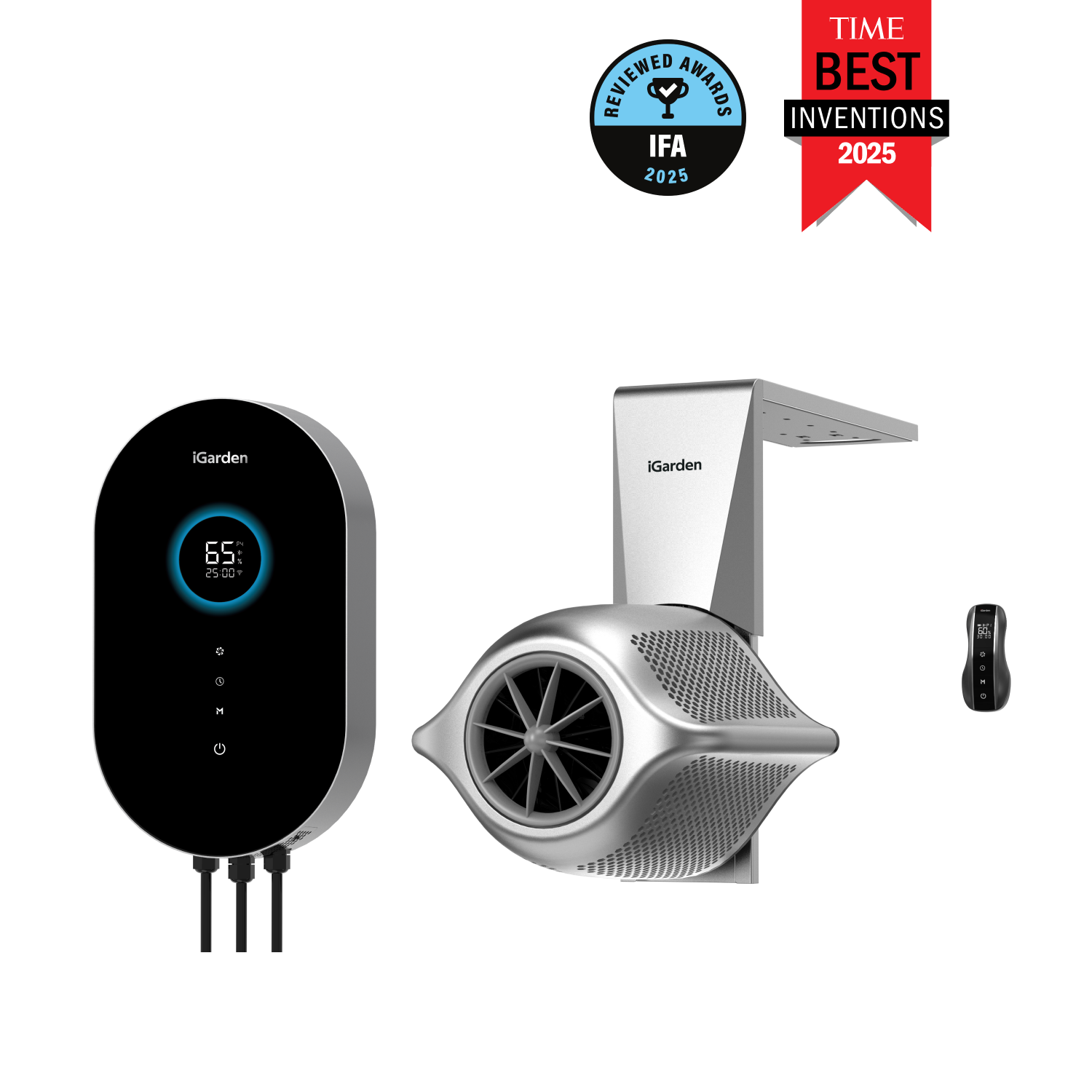
iGarden Swim Jet P Series
The Time Best Inventions of 2025. The stainless-steel system uses full-inverter technology for quiet, variable power and a patented flow-channel design that creates wider, consistent currents of up to 1,100 gallons per minute.
Buy NowiGarden Portable Swim Jet X Series
The iGarden Swim Jet X Series runs on an internal battery, clips onto the pool edge, and fits multiple pool sizes starting from 2m x 4m, making it compatible with most backyard and above-ground pools. Training, playing, relaxing, experience the freedom of unlimited swimming, which make everyone from leisure swimmers to serious training, and the whole unit moves between properties or into storage when the season ends. For most readers who want to add real water exercise to a routine without rebuilding the pool, this is where to start.
- Best-in-Class Water Flow: AI Inverter Tech delivers the strongest water flow in its class.
- 1-Min Setup: No drilling, no renovation. Clamp the jet and go.
- All in One: Training, playing, relaxing, experience the freedom of unlimited swimming.
- Universal Pool Fit: Rectangular pools, freeform pools, above-ground pools, lap pool, etc.
- 360° Safety Guard:IP68 and IP65 rated waterproof, auto shut-off system, human-safe low voltage, 2-year main unit warranty.
- Hassle-free & Portable: Lithium battery powered, roll it away with one hand like a carry-on.

iGarden Portable Swim Jet X
Best-in-Class Water Flow: AI Inverter Tech delivers the strongest water flow in its class. 1-Min Setup: No drilling, no renovation. Clamp the jet and go. All in One: Training, playing, relaxing, experience the freedom of unlimited swimming.
7.Final Thoughts
Choosing the right swim jet system depends on your fitness goals, pool design, and budget. For families or casual swimmers, flexibility and ease of installation may matter most. For fitness-focused users, current quality and adjustability should be prioritized.
For those seeking a balance between performance and minimal pool modification, deck-mounted systems like the iGarden Swim Jet P series provide a practical entry point into continuous swimming without the cost and disruption of a full pool renovation.
